

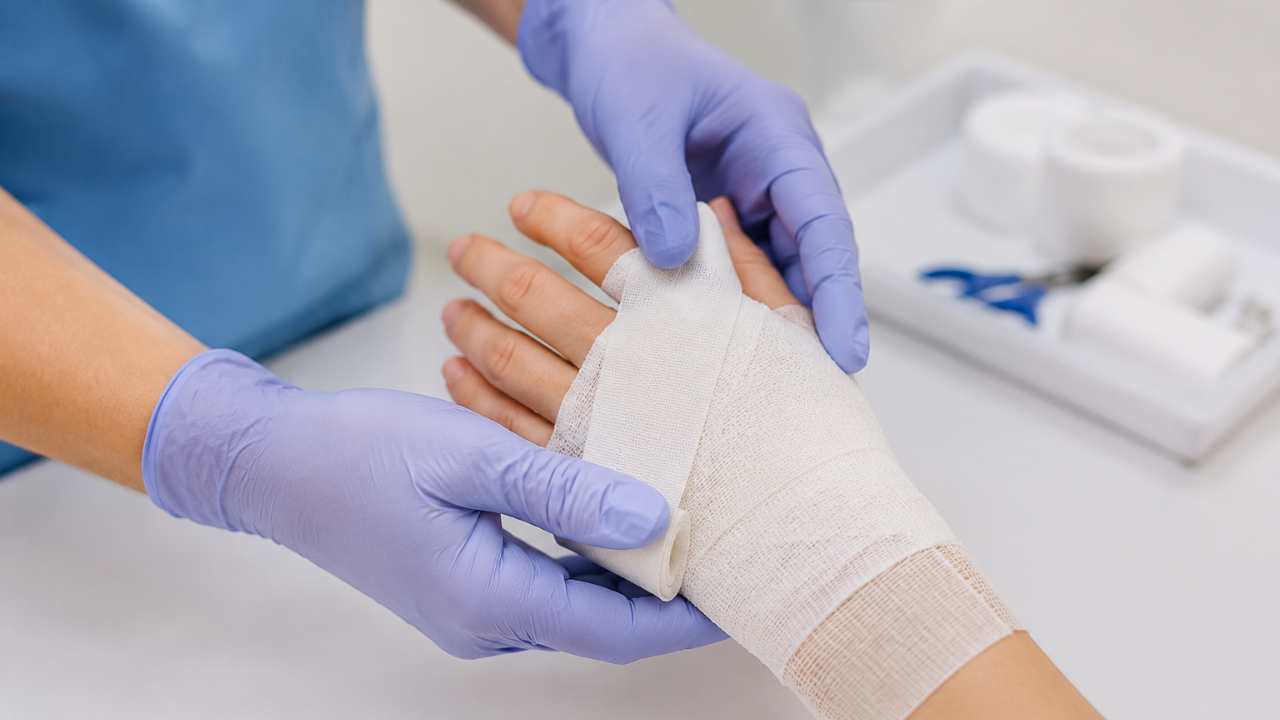
Wound Care in Orange County does not always require another difficult trip to a hospital or clinic. If you or a loved one has limited mobility, is recovering from surgery, or needs ongoing treatment for a chronic wound, arranging transportation can be exhausting for everyone involved. Missing or delaying appointments, however, may allow a wound to become more difficult to manage. In-home mobile wound care offers a practical alternative by bringing experienced wound care professionals directly to the patient’s home or care setting—making specialized treatment more accessible, comfortable, and easier to maintain.
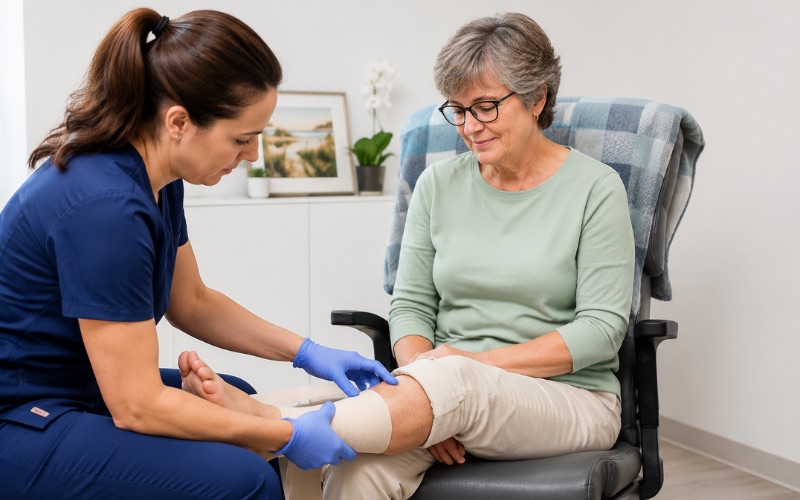
Why More Orange County Patients Are Choosing In-Home Mobile Wound Care
When someone has a serious or slow-healing wound, getting medical care should be the priority. Unfortunately, simply reaching a clinic can become one of the biggest obstacles.
A patient may be unable to walk comfortably, use a wheelchair, remain in bed for most of the day, or feel significant discomfort during transportation. Family members may need to take time away from work, arrange an accessible vehicle, help the patient transfer in and out of the car, and wait through a lengthy appointment.
For seniors, post-surgical patients, and people living with chronic medical conditions, repeating this process every time the wound needs to be evaluated can become overwhelming.
Mobile wound care helps remove that barrier.
Instead of asking a medically vulnerable patient to travel, a wound care provider visits the patient where they live. Care may be delivered in a private residence, assisted living facility, board and care home, or other appropriate care setting.
For patients and caregivers, this means professional wound care can become part of a manageable routine rather than another stressful trip outside the home.
When Traveling for Wound Care Becomes Part of the Problem
A clinic visit may be especially difficult when a patient:
- Has limited mobility or difficulty walking
- Uses a wheelchair or other mobility device
- Is bedridden or requires assistance with transfers
- Experiences pain when sitting or traveling
- Recently returned home after hospitalization or surgery
- Depends on a family member for transportation
- Lives in an assisted living or residential care setting
- Needs frequent wound reassessment or dressing support
In these situations, in-home wound care provides another way to access specialized treatment without ignoring the patient’s physical limitations or the caregiver’s responsibilities.
Benefits of In-Home Mobile Wound Care
The main benefit of mobile wound care is not simply convenience. It is the ability to make consistent, specialized care more accessible for patients who may otherwise delay or miss treatment.
No Need to Arrange Difficult Transportation
Transporting a patient with reduced mobility may require an accessible vehicle, multiple caregivers, or medical transportation. Even a short drive can be physically demanding when the patient has a painful wound, pressure injury, recent surgical incision, or serious health condition.
With mobile care, the provider comes to the patient. This reduces the logistical burden on families and allows the patient to remain in a familiar environment.
Less Physical and Emotional Stress
Leaving home can be tiring or uncomfortable for older adults and patients who are medically fragile. Some may experience anxiety about transfers, long waiting periods, crowded medical offices, or the possibility of worsening their discomfort during travel.
Receiving care at home can make the experience feel calmer and more personal. The patient can be evaluated in the environment where daily wound care, positioning, nutrition, and caregiver support actually take place.
More Consistent Wound Monitoring
Wounds can change over time. Drainage, tissue appearance, pain, swelling, odor, and surrounding skin may provide important information about whether healing is progressing as expected.
Scheduled mobile visits allow the wound care provider to reassess the wound, document changes, and modify the treatment plan when clinically appropriate.
Consistent monitoring may also help identify concerning changes before they become more difficult to manage.
A Treatment Plan Based on the Individual Patient
Wound care is not one-size-fits-all. A treatment plan may be influenced by the type of wound, its location and severity, the patient’s circulation, mobility, nutrition, medications, underlying medical conditions, and ability to follow the care plan.
An in-home evaluation gives the provider an opportunity to understand both the wound and the patient’s daily circumstances.
Depending on clinical needs, care may include:
- Wound assessment and measurement
- Specialized dressing recommendations
- Wound cleansing
- Debridement when medically appropriate
- Pressure relief or offloading recommendations
- Wound VAC support
- Monitoring for possible complications
- Education for patients and caregivers
- Coordination with other healthcare professionals
The exact treatment plan should always be based on an individual clinical assessment.
Practical Support for Family Caregivers
Family caregivers often play an essential role between professional visits. They may help observe the wound, keep dressings protected, reposition the patient, manage appointments, or report changes to the healthcare team.
However, many caregivers feel unsure about what they should be doing or which changes are concerning.
During a mobile visit, caregivers can receive guidance specific to the patient’s care plan, including how to protect the wound, what warning signs to watch for, and when to contact a healthcare provider.
That support can provide greater confidence and peace of mind.
Care in the Patient’s Real Living Environment
A home visit gives the provider insight into factors that may not be visible during a brief clinic appointment.
For example, the provider may be able to identify challenges involving the patient’s bed, wheelchair, footwear, positioning routine, mobility limitations, caregiver support, or access to wound care supplies.
Understanding these circumstances can help make the care plan more realistic and easier for the patient and family to follow.
Who Can Benefit from Mobile Wound Care?
Mobile wound care may be appropriate for patients who need specialized wound evaluation but face physical, medical, or logistical barriers to visiting a clinic.
It may be especially helpful when:
- Your loved one has difficulty walking or leaving home
- Every medical appointment requires significant family assistance
- The patient is bedridden or has limited ability to reposition
- The patient recently returned home after surgery or hospitalization
- A wound requires ongoing professional monitoring
- The patient lives in assisted living, board and care, or a skilled nursing facility
- Transportation limitations are causing delayed or missed appointments
- A caregiver needs professional support managing a complex wound
Mobile providers may evaluate and manage various acute and chronic wounds, depending on the patient’s condition and whether home-based treatment is clinically appropriate.
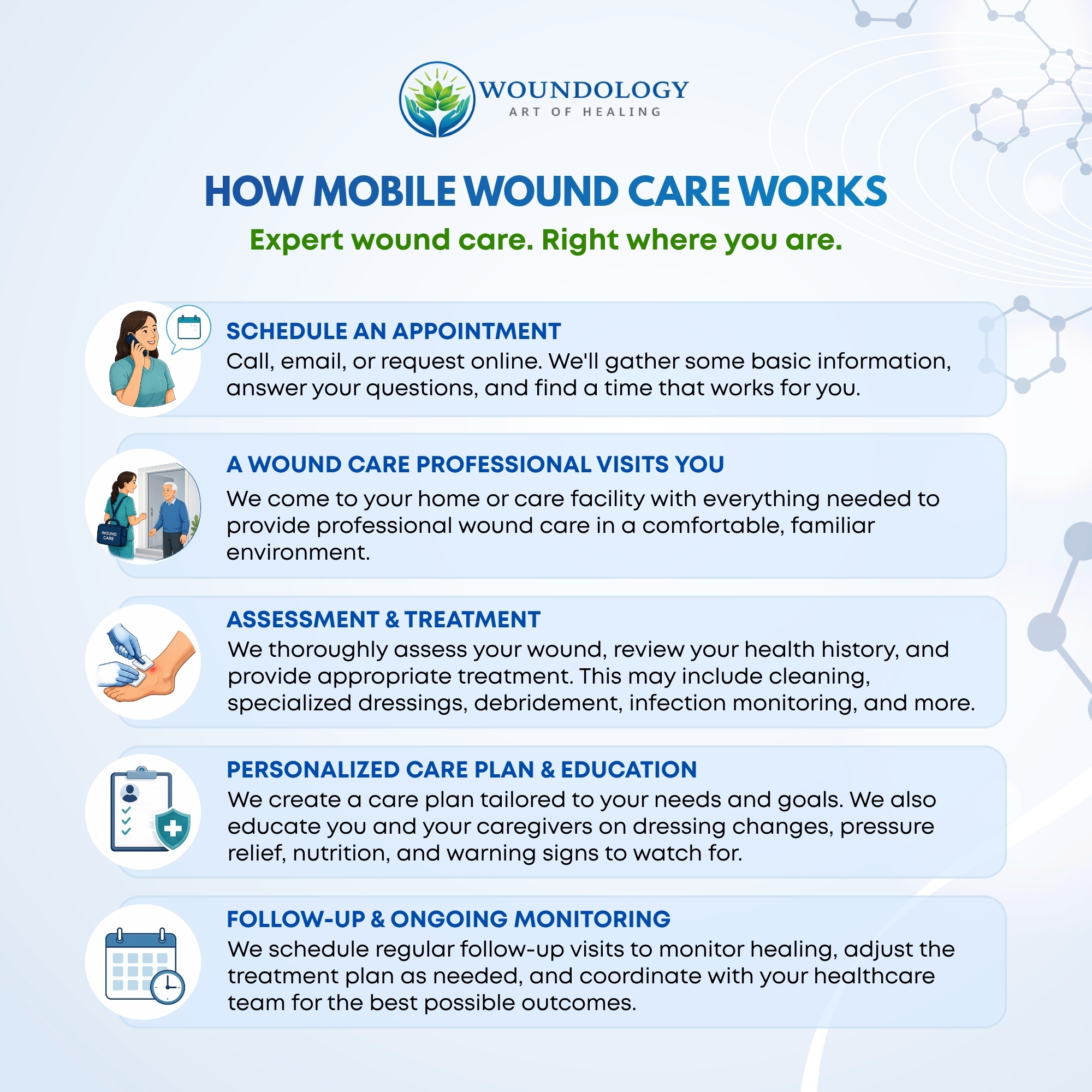
How Mobile Wound Care Works
Families are often unsure what to expect when arranging wound care at home. The process is designed to be straightforward and patient-centered.
1. Contact the Mobile Wound Care Team
The patient, family member, caregiver, physician, discharge planner, or healthcare agency contacts the provider to request an appointment.
The team may ask for basic information about the wound, the patient’s medical condition, location, insurance coverage, and recent healthcare history.
2. Confirm Whether Mobile Care Is Appropriate
Not every wound should be managed at home. The provider reviews the available information to determine whether a mobile visit is appropriate or whether the patient should seek urgent or emergency treatment.
This initial screening helps ensure the patient is directed to the right level of care.
3. A Wound Care Professional Visits the Patient
The provider travels to the patient’s home or eligible care setting in Orange County.
During the initial visit, the provider may review:
- Medical history and current diagnoses
- Medications and allergies
- How and when the wound developed
- Previous wound treatments
- Pain and mobility limitations
- Wound size, depth, drainage, and tissue appearance
- Skin condition around the wound
- Possible factors delaying healing
Additional clinical evaluation may be recommended depending on the patient’s condition.
4. A Personalized Care Plan Is Developed
After completing the assessment, the provider creates a treatment plan based on the wound and the patient’s overall health.
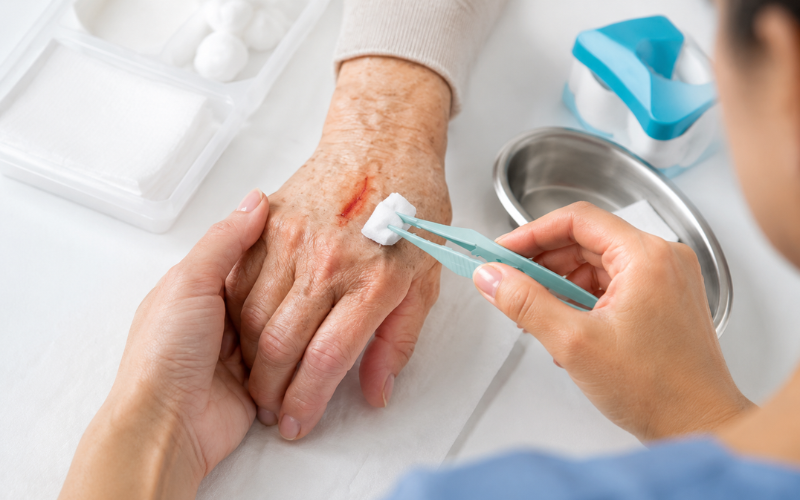
The plan may involve wound dressings, debridement, pressure management, Wound VAC assistance, caregiver education, follow-up visits, or coordination with the patient’s physician and other healthcare professionals.
5. Follow-Up Visits Monitor Progress
Wound care often requires more than one visit. Follow-up appointments allow the provider to track changes, evaluate the response to treatment, and adjust the care plan when needed.
Patients and caregivers should continue following the provider’s instructions between visits and report any concerning changes promptly.
When Should You Seek Professional Wound Care?
It is easy to assume that a wound will heal on its own. However, certain wounds need professional evaluation, especially when the patient has diabetes, circulation problems, reduced sensation, limited mobility, or a weakened immune system.
Contact a healthcare provider if:
- The wound is not showing signs of improvement
- The wound becomes larger or deeper
- Pain is increasing rather than improving
- Redness, warmth, or swelling develops around the wound
- Drainage increases or changes in color
- Pus or an unpleasant odor is present
- The surrounding skin changes color
- The wound appears dark, blue, or black
- The patient has a new foot wound and also has diabetes
- The wound repeatedly reopens
- You are unsure how to clean, dress, or protect it safely
Why Orange County Patients Trust Woundology
Woundology was created to make specialized wound care more accessible to patients who may struggle to visit a traditional clinic.
The mobile team provides care throughout Orange County and other Southern California service areas, meeting patients in homes and eligible residential or care facilities.
Experienced Wound Care Professionals
Woundology is led by providers with emergency medicine and wound care experience.
Dr. Megha Patel is an emergency medicine-trained physician with experience treating complex wounds and high-acuity medical conditions. Mai Le, PA-C, CWS, WCC, is trained in emergency medicine and holds wound care certifications through recognized professional wound care organizations.
This clinical background allows the team to evaluate wounds while also considering the patient’s broader health needs.
Care That Comes to the Patient
For patients who cannot travel comfortably, accessibility matters.
Woundology provides mobile services in settings that may include:
- Private homes
- Assisted living facilities
- Board and care homes
- Skilled nursing facilities
Patients and caregivers should contact the team to confirm availability for their location and clinical needs.
Treatment for Multiple Types of Wounds
Woundology provides assessment and treatment for conditions that may include diabetic, pressure, venous, arterial, surgical, traumatic, burn, and malignant wounds.
Services may also include wound VAC assistance, debridement, suture removal, light dermatologic care, and selected bedside procedures when appropriate.
All services depend on the patient’s individual medical needs and the provider’s clinical assessment.
Coordination With Families and Healthcare Teams
Complex wounds may involve multiple professionals, including primary care physicians, specialists, home health agencies, hospitals, and residential care teams.
Woundology works with patients, families, caregivers, and referring providers to support continuity of care and help everyone understand the treatment plan.
Compassionate Care With Dignity
Patients with chronic or complex wounds may feel discouraged, uncomfortable, or dependent on others. Woundology’s approach focuses not only on the wound itself but also on treating the patient with dignity, respect, and personal attention.
For families, having a specialist come to the patient can make care feel less overwhelming and more manageable.
You Do Not Have to Struggle With Every Hospital Trip
When you or a loved one needs professional wound care, limited mobility should not automatically become a barrier to receiving help.
Woundology brings specialized Wound Care in Orange County directly to eligible patients at home and in appropriate care settings. The team can evaluate the wound, develop an individualized treatment plan, provide follow-up care, and support family caregivers throughout the healing process.
Contact Woundology today to discuss the patient’s condition, confirm service availability, and schedule an in-home wound care evaluation.
Woundology’s mobile wound care services, please call (714) 643-5818. Referrals may be faxed to (714) 462-3074 or emailed to referral@woundologyclinic.com .
Our mobile wound care specialists provide advanced wound treatment services in homes, skilled nursing facilities (SNFs), assisted living communities, hospice, and home health settings throughout Southern California.